Fixed tooth replacement · Union, NJ
Dental Bridges
A dental bridge replaces one or more missing teeth by anchoring a replacement tooth to the healthy teeth on either side. Bridges restore your ability to chew and speak and help prevent remaining teeth from shifting.
The essentials
What is a dental bridge?
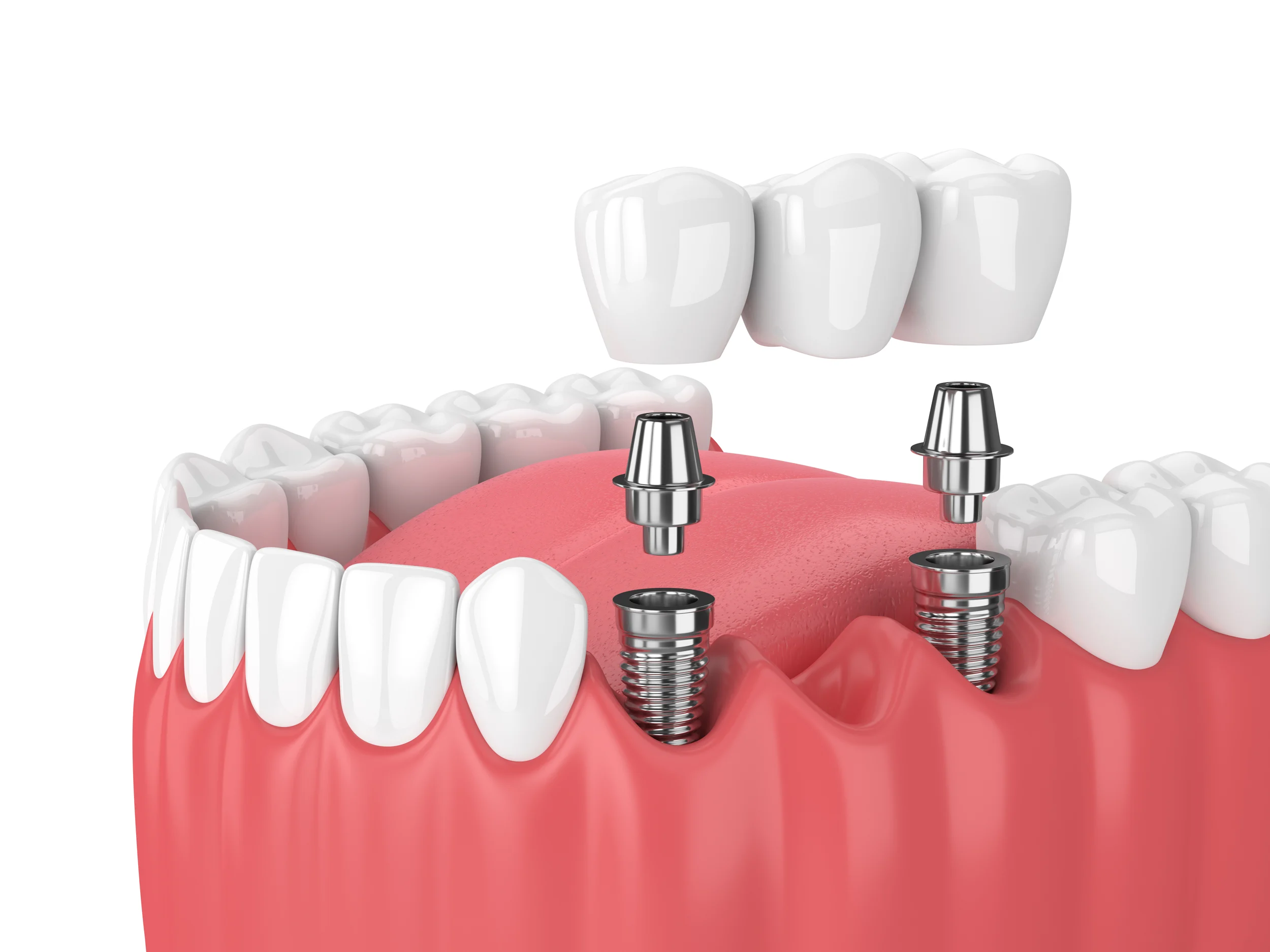
A bridge is a non-removable restoration that fills a space using one or more artificial teeth connected to supporting crowns or implants.
A traditional bridge usually relies on teeth beside the gap for support. It can restore appearance and function without surgery, although those supporting teeth must be prepared for crowns.
Michael Hogan, DDS, and the Union Family Dental team in Union, NJ assess the gap, supporting teeth, gums, bite, and bone before comparing a bridge with implant-based treatment.
Your bridge procedure
What does treatment involve?
A traditional bridge generally requires planning, tooth preparation, a custom laboratory restoration, and final placement.
-
Evaluate
Dr. Hogan examines the gap, supporting teeth, gums, and bite and takes diagnostic images.
Consultation visit -
Prepare
The supporting teeth are shaped and digitally scanned; a temporary bridge may protect the area.
First treatment visit -
Fabricate
A dental laboratory creates the bridge to match the planned shape, fit, and shade.
Timing varies -
Place
The bridge is checked, adjusted, secured, and reviewed for comfortable function.
Placement visit
Is it right for you?
Am I a good candidate?
A bridge can be a practical fixed option when the teeth and gums around a gap can support the restoration.
- You are missing one or more neighboring teeth
- The supporting teeth are healthy or already need crowns
- You want a fixed alternative to a removable partial denture
- You prefer to avoid or are not eligible for implant surgery
A consultation compares the long-term effect, treatment time, maintenance, and cost of each replacement option.
Planning your care
How much does a dental bridge cost in Union, NJ?
Cost depends on the number of replacement teeth, supporting units, material, and whether the supporting teeth require additional treatment. A written estimate is provided after evaluation.
Insurance may provide partial benefits for a medically necessary bridge. Coverage and financing options vary by plan and treatment.
Request a personalized estimateCompare your options
Dental bridge or dental implant?
Both replace a missing tooth, but they differ in support, treatment time, maintenance, and their effect on nearby structures.
Dental bridge
Fixed to neighboring teeth, usually completed without implant surgery, and generally has a shorter treatment timeline.
Dental implant
Supported independently in the jaw, does not require preparing neighboring teeth, and helps preserve bone at the missing-tooth site.
Patient stories
Recent five-star Google reviews
Helpful answers
Frequently asked questions
Longevity varies with hygiene, bite, material, and the health of supporting teeth. Regular maintenance helps protect the bridge.
The better option depends on nearby teeth, bone, health, timing, budget, and preferences. A clinical evaluation is needed.
Floss threaders, interdental brushes, or a water flosser can clean beneath the replacement tooth. The hygiene team will demonstrate suitable techniques.
Many plans provide partial benefits, subject to deductibles, waiting periods, missing-tooth clauses, and annual limits.
Ready to get started?
Replace missing teeth with a fixed bridge
Book with Dr. Hogan or the Union Family Dental team.